Nuqta Portfolio · Case Study 01
Building a defensible map of Gulf genomics.
How Nuqta turned a fragmented public evidence base into a versioned, source-backed index that can be audited, extended, and reused.
Living Atlas now
v0.3.0 · 961 public records
The figures below preserve the v0.1.0 case-study snapshot. The living release contains 13 additional records and 45 additional public source rows.
Explore the current releaseThe analytical problem
Public evidence existed. A defensible regional record did not.
Genomics projects connected to Saudi Arabia and the Gulf are distributed across repositories, institutional pages, ministries, papers, and programme announcements. The same initiative can appear under several names, one repository study can contain many submissions, and a registration date can be mistaken for evidence that a wider programme is still active.
Nuqta Atlas treats those inconsistencies as an analysis problem. The release separates discovery from interpretation, records provenance, applies explicit inclusion rules, and withholds unresolved candidates instead of forcing them into the public index.
Workflow
From scattered records to a release that can be rerun.
- Define the inclusion rule and controlled vocabularies before adding records.
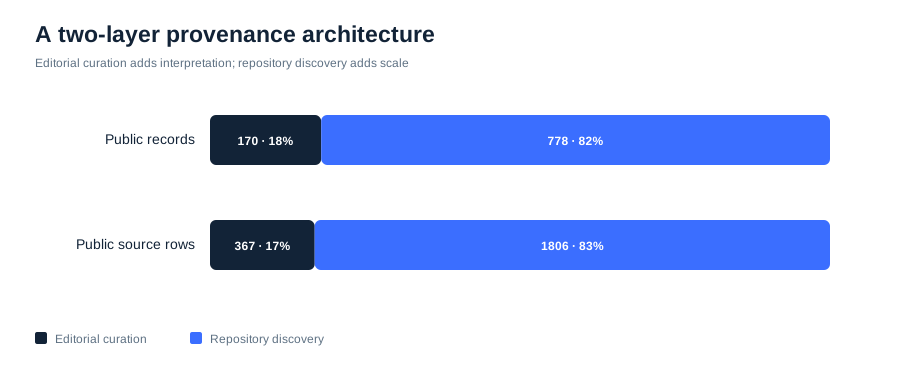
- Separate programme-level editorial records from repository-discovered series.
- Group repeated repository submissions without erasing accession-level provenance.
- Assign evidence grades and keep unresolved candidates outside the public release.
- Generate versioned release artifacts and validate record, source, relationship, and export parity.
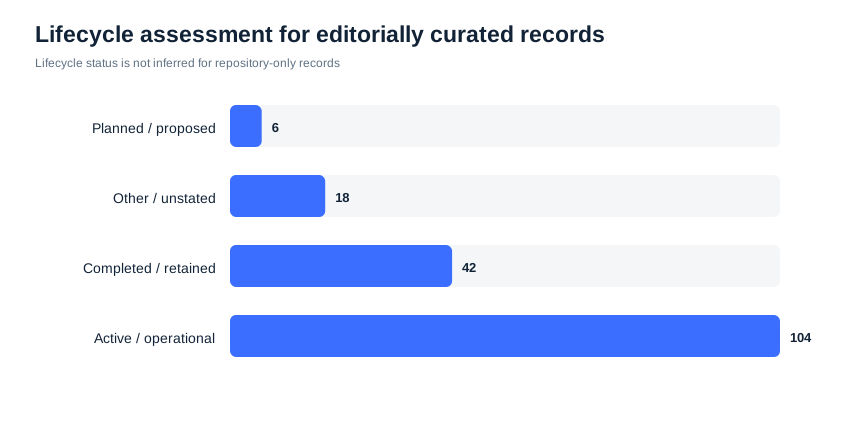
- Analyze geographic coverage, research domains, provenance architecture, and lifecycle status with explicit caveats.
Figures
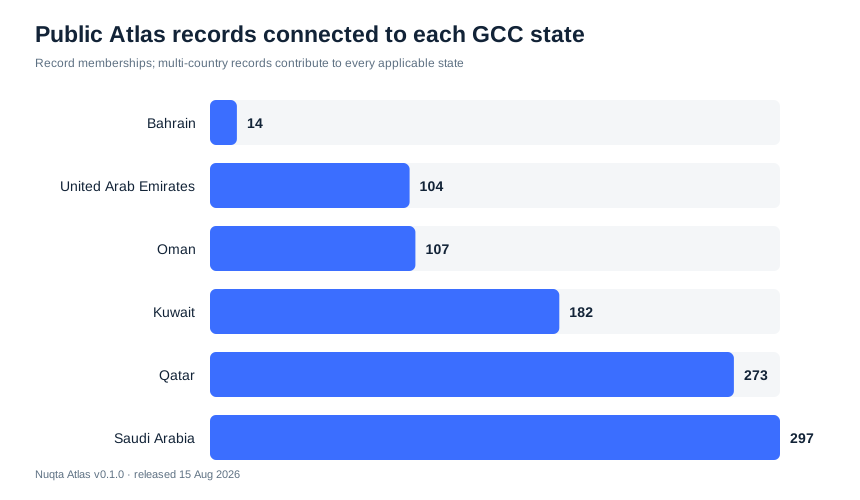
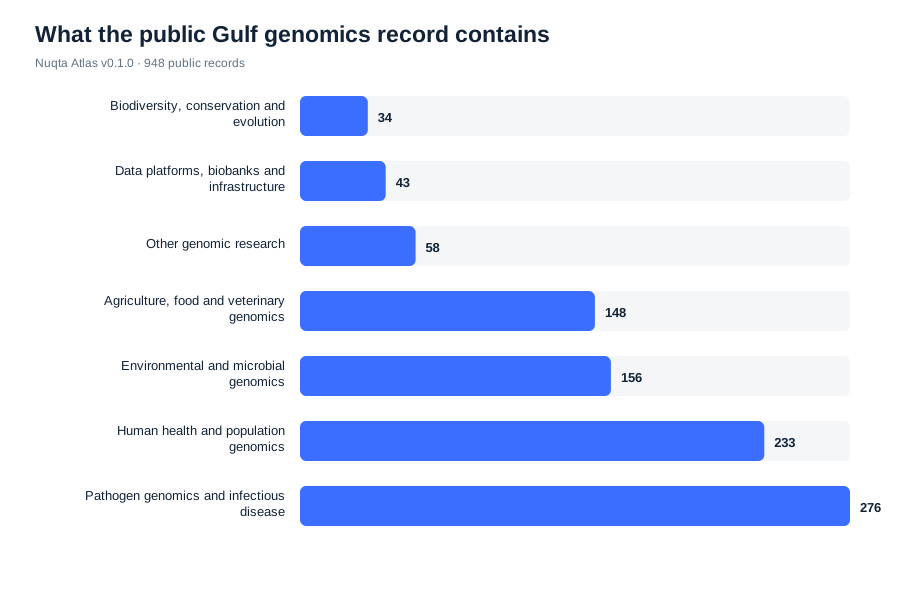
Four views of the same release—each answering a different question.
Reproducibility
The output is a handover, not a screenshot.
The internal case-study package preserves the source release, compact JSON and CSV summaries, a Python figure-generation script, editable SVG figures, high-resolution PNGs, methods, limitations, and a PDF narrative. The same standard is intended for Analysis Rescue work.
- Inspectable source and summary data
- Executable figure-generation code
- Editable and publication-ready figure exports
- Methods and limitation statements that can be adapted into a manuscript
- A clear technical handover so another analyst can continue the work
Interpretation boundary
What this analysis does not claim.
- Country counts are overlapping memberships, not mutually exclusive project totals.
- Repository registration proves a durable public record and regional connection; it does not prove that a broader programme is currently active.
- Coverage reflects discoverable public evidence and changes across releases.
- Nuqta Atlas is a public research index, not a clinical database.
Case Study 01 uses the public Nuqta Atlas v0.1.0 release dated 15 August 2026. Public release: 948 records, 2,173 source rows, 873 Grade-A records and 75 Grade-B records.
Need the same discipline applied to your sequencing project?